High above the Valtiberina in eastern Tuscany sits a hilltop town where history isn’t boxed away in a museum but written into the streets and skyline. Officially recognised among the Borghi più belli d’Italia, this village carries its medieval credentials lightly.
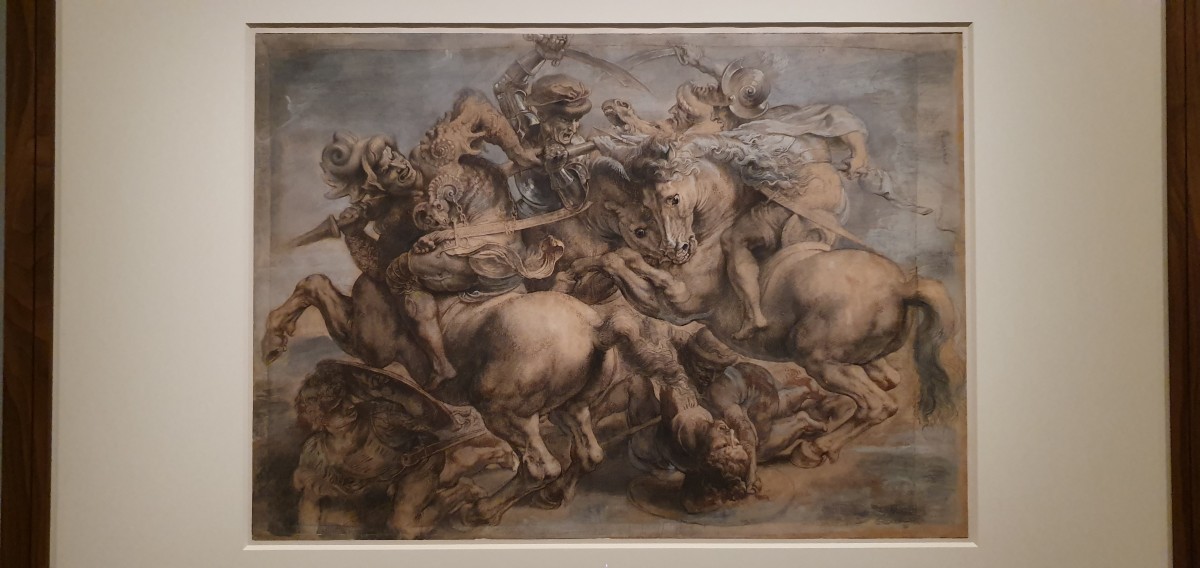
What truly sets it apart, though, is its link to Leonardo da Vinci and the unfinished Battle of Anghiari — a lost mural that disappeared centuries ago, yet still lingers in the landscape where the real battle was fought.
The secret of Leonardo: the lost battle of Anghiari
In 1440, the armies of Florence and Milan clashed on the plain below Anghiari. Venice and the Papal States were also involved, and the Florentines secured victory in less than a day. The battle became politically significant for Florence and was later chosen as the subject of a major state commission.
Decades later, Leonardo da Vinci was tasked with depicting the battle inside the Salone dei Cinquecento in Florence. He experimented with an innovative painting technique, but the wall preparation failed, and the mural was never completed.
In Anghiari, the event still shapes local identity in this part of Tuscany. The surrounding landscape gives context to the battle, and the town’s museums keep alive the memory of Leonardo’s unfinished masterpiece.
What to see in Anghiari’s historic centre
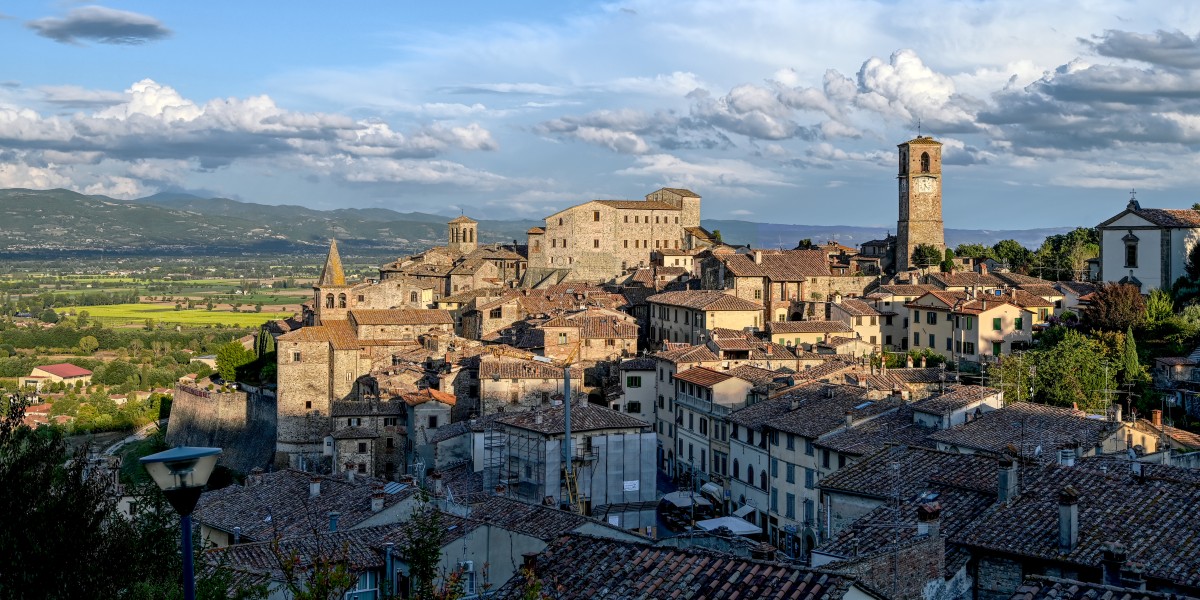
Anghiari is compact and steep, built along a ridge with narrow lanes and stepped streets.
Badia di San Bartolomeo
The town’s main church stands near the heart of the village. Inside, you’ll find a late 13th-century wooden crucifix and Madonna con Bambino attributed to Tino di Camaino.
Orto del Vicario
A small garden planted with labelled medicinal herbs that provides a shaded pause during a climb through the village.
Belvedere Gian Franco Vené
This is one of the widest panoramic terraces over the Valtiberina. On a clear day, the patchwork of fields and low hills spreads out below in a way that makes the strategic importance of the area easier to grasp.
The Campano Clock Tower
Rebuilt in the 17th century, the Campano has marked the rhythm of daily life here for centuries.
Via della Torre
Formerly known as “Cordoni”, this stepped street was shaped to allow the passage of donkeys and mules.
Church of Sant’Agostino
Along via Garibaldi, this church houses a 16th-century glazed terracotta Adorazione dei pastori, attributed to Santi Buglioni.
Museums and palaces in Anghiari
If you’re interested in the Renaissance angle, the museums here are essential rather than optional.
Museo della Battaglia e di Anghiari
Housed in Palazzo Marzocco on Piazza Mameli, this museum traces the area’s history across centuries. Highlights include a detailed section on the 1440 battle and material relating to Leonardo’s unfinished mural.
Palazzo Pretorio
A short walk away, Palazzo Pretorio still displays the carved coats of arms of Florentine vicars on its 15th-century façade. Inside, there’s a 15th-century fresco attributed to Antonio di Anghiari.
Castles and historic sites near Anghiari
The countryside around Anghiari is dotted with fortifications dating back to the 11th century and beyond.
Montauto Castle
At roughly 800 metres above sea level, Montauto combines medieval foundations with Renaissance and 19th-century alterations.
Galbino Castle
Originating around the year 1000, Galbino has a square plan with cylindrical corner towers and a long stone loggia along the façade.
Pieve di Santa Maria a Micciano
An early medieval baptismal church, it retains fragments of 14th-century frescoes and artworks attributed to Niccolò Soggi and Giovan Battista Naldini.
Stay inspired for your travels in Italy —get our weekly newsletter for the latest travel, legal, and lifestyle news.