A vast Roman arena built for around 60,000 spectators sits in Campania rather than Rome, with a maze of underground passages beneath its floor. The site formed part of ancient Capua, a city whose remains stretch far beyond a single monument, taking in gladiator history, painted cult spaces and Roman tombs beside a modern town.
The Campanian Amphitheatre and its underground world
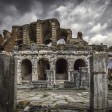
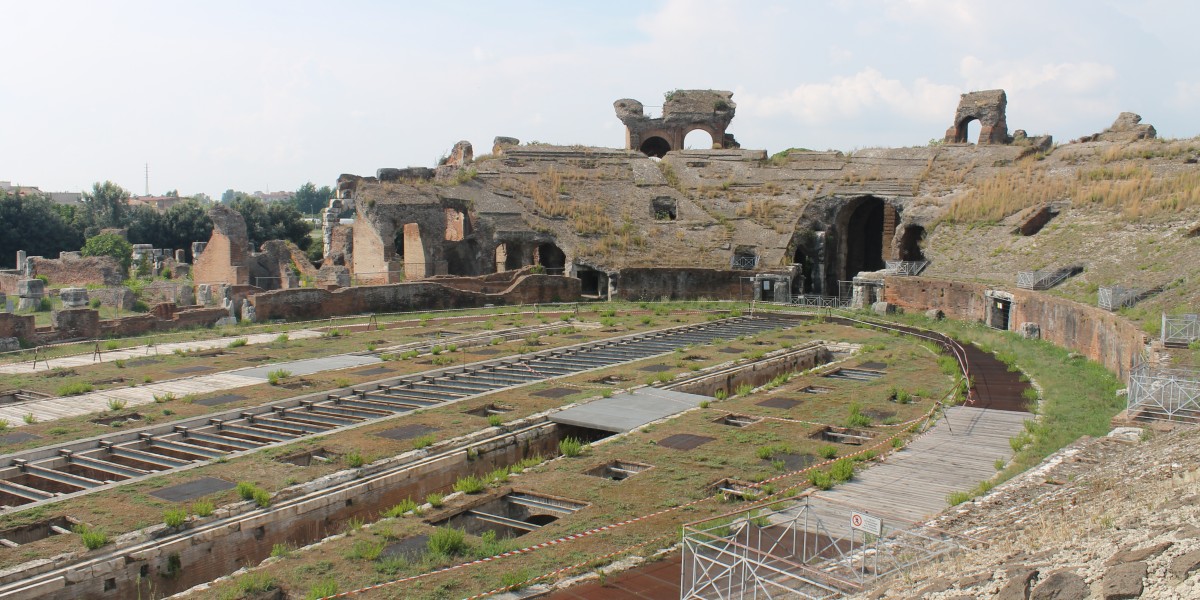
The Campanian Amphitheatre in Santa Maria Capua Vetere is described as the second-largest amphitheatre in the world after the Colosseum. Its scale remains clear in the elliptical seating structure and broad arena, but the most arresting part lies underneath.
A network of underground corridors survives beneath the arena. Spaces for the mechanisms that brought animals and scenery into view are still visible, including systems of pulleys and cages that connected the darker passages below with the performance space above.
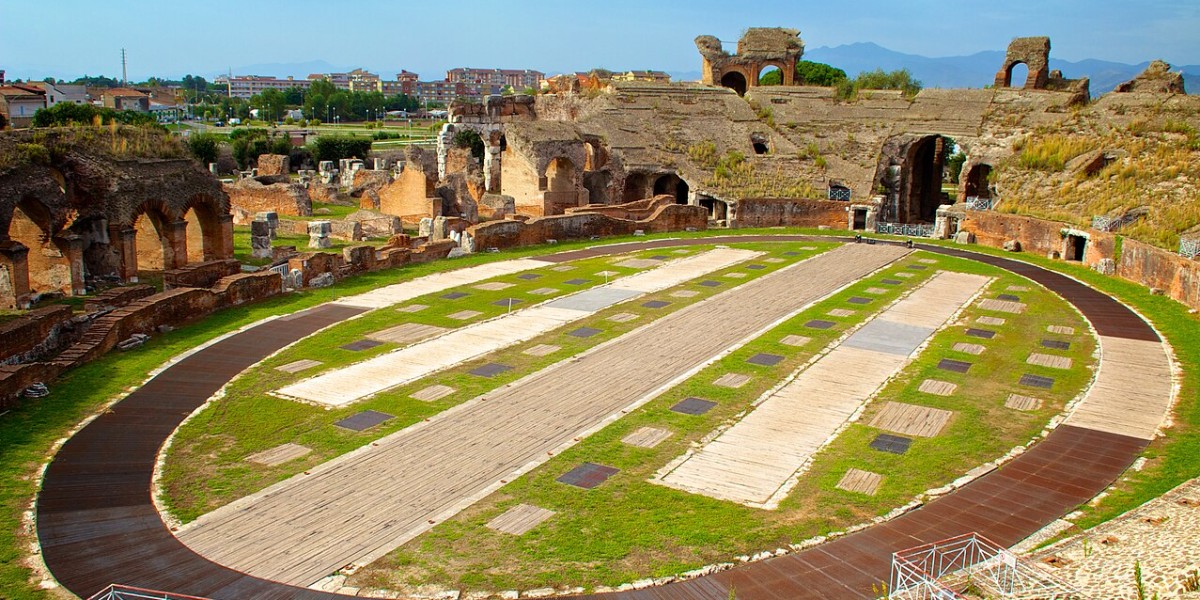
The amphitheatre seen today dates to the Flavian period, between the late 1st and 2nd centuries AD, replacing an earlier structure linked in the source material with the revolt of Spartacus in 73 BC.
It was declared a National Monument in the 19th century and opened to visitors in 1913.
Beyond the main arena, the surrounding archaeological area contains traces of an older entertainment district.
Gladiators, Capua and a museum built around the arena
Ancient Capua had one of the Roman world’s most important gladiator schools. The nearby Museum of the Gladiators traces the theatrical machinery and social order behind arena spectacles through armour replicas from Pompeii, marble fragments, a reconstruction of part of the seating area and a model following the amphitheatre’s history.
One particularly unusual stop is the Mithraeum of Santa Maria Capua Vetere, an underground temple dedicated to Mithras. Discovered in 1922, it contains an exceptionally complete series of Mithraic paintings, including six-pointed stars on the ceiling and a 2nd-century depiction of Mithras killing a bull.
A Roman city beneath Santa Maria Capua Vetere
The archaeological remains continue through present-day Santa Maria Capua Vetere, which largely occupies the site of ancient Capua. Along the Appian Way, the Arch of Hadrian still has three substantial brick pillars, with two supporting an arch used by modern traffic.
Two large Roman funerary monuments also survive in the urban landscape. The Conocchia has a square plan with corner towers, while the Carceri Vecchie comprises two stacked cylindrical structures topped by the small church of Madonna della Libera.
Tickets, access and the best time to visit
The site is in Piazza Adriano, Santa Maria Capua Vetere. An integrated ticket for the National Archaeological Circuit of Ancient Capua, including the amphitheatre and Mithraeum, costs €6 from 2 February 2026. Visitors aged 18 to 25 pay €2, while statutory free-entry arrangements continue.
Tickets can be bought online through the Musei Italiani website or app, or with a credit or debit card at on-site automated ticket machines. The Mithraeum requires a separate telephone reservation because of its limited capacity.
All information in this piece is based on The WOM Travel’s Italian article: “È il secondo anfiteatro più grande al mondo e si trova in Campania”.