Between Burano and Sant’Erasmo sits a tiny island almost entirely occupied by a working Franciscan monastery. Public vaporetti don’t stop here, so no day-trippers hopping on and off, no café terraces, no souvenir stalls.
It’s one of the few places in Venice where the rhythm still follows monastic life rather than cruise ship timetables.
Where is San Francesco del Deserto?
San Francesco del Deserto lies in the northern Venice lagoon, closer to Burano than to central Venice. If you look at a map, it’s a small green patch set in open water, surrounded by salt marshes and shallow channels typical of this part of the lagoon.
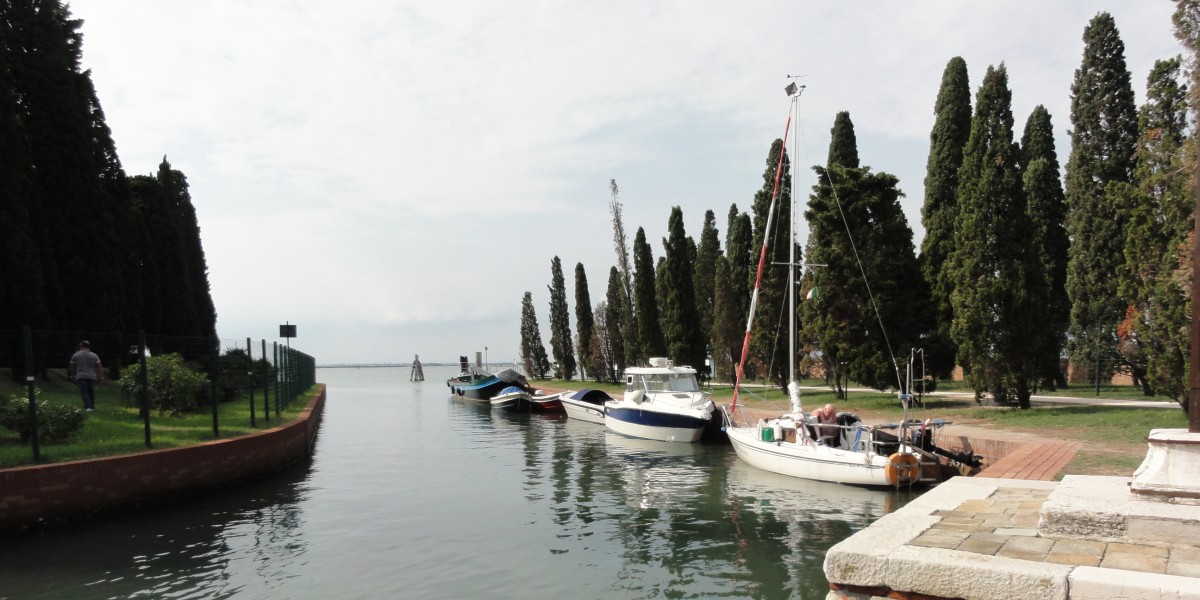
The island covers roughly 40,000 m² and is edged with cypress and maritime pine trees, which give it a darker, more secluded appearance than the brightly painted houses of nearby Burano.
Why no vaporetto stops here
There is no vaporetto stop on the island. The public waterbus network serves Murano, Burano, Torcello and Sant’Erasmo, but San Francesco del Deserto is deliberately left off the route.
The reason is simple: it isn’t a museum or a tourist attraction in the usual sense. It is an active Franciscan monastery, inhabited by friars. Access is controlled to protect the religious community’s daily life and to keep visitor numbers manageable in a fragile lagoon environment.
What you see during the visit
You can only enter the island as part of a guided visit led by one of the friars, usually in small groups. The tour lasts around 40 minutes and follows a set route through the main parts of the monastery.
The first stop is the older cloister, originally dating back to the 1200s and later rebuilt after damage during the Napoleonic period.
Marble plaques refer to two important episodes in the island’s history: the donation of the island to the Franciscans and the tradition of the “miracle of the silence of the birds”, linked to St Francis.
The small church dates to 1401, built on the site of an earlier Byzantine structure. Inside, the style is sober and uncluttered, in keeping with Franciscan spirituality.
The friars maintain a vegetable garden, and there are a few animals on the island. Two small terraces look out across the lagoon towards Burano, with views over the flat, marshy landscape typical of this northern stretch.
A brief history of San Francesco del Deserto
Before it took its current name, the island was called the “Island of the Two Vineyards” and belonged to a Venetian noble family.
- In 1220, St Francis of Assisi stopped here on his return from the East, after he met with the Sultan of Egypt during the Fifth Crusade.
- In 1233, the nobleman Jacopo Michiel donated the island to the Franciscan Order, establishing a religious presence that has lasted, with interruptions, ever since.
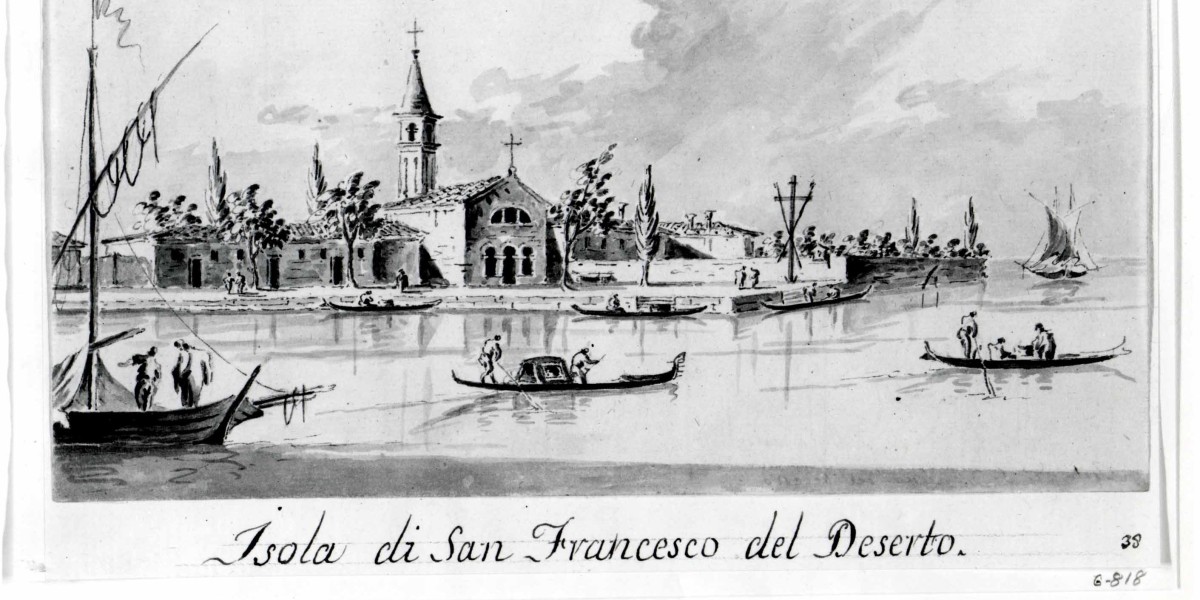
The name “del Deserto” emerged during a period in the 15th century when disease, including malaria in the marshy lagoon areas, led to temporary abandonment and isolation.
- A second major interruption came in 1808, when Napoleonic troops suppressed many religious houses and converted the monastery into a warehouse and gunpowder store.
- In 1858, Father Bernardino da Portogruaro helped restore the island to religious use, and his tomb remains there today.
How to visit San Francesco del Deserto
Visiting requires a bit of planning.
- First, take a vaporetto to Burano. Journey times vary depending on the route and changes.
- As there is no public vaporetto stop, you have two main options:
- Seasonal private shuttle boat operating between Burano and San Francesco del Deserto, typically active from 1 April to the end of October, usually once daily in the afternoon.
- Private water taxi or private boat, arranging docking at the island’s small pier. There is limited space for small boats in the adjacent canal.
Visiting hours, rules and practicalities
Access is only via guided tour, and independent wandering around the monastery is not permitted. Visits generally take place within two time windows:
- Morning: roughly 9:00 to 11:00
- Afternoon: roughly 15:00 to 17:00
There are several departures within those slots. The island is typically closed to visitors on Mondays, and also on certain Franciscan feast days, including 17 September and 4 October.
There is no entrance ticket. At the end of the visit, guests are invited to leave a voluntary donation, which contributes to the upkeep of the monastery and island.
Should you add San Francesco del Deserto to your Venice plans?
San Francesco del Deserto suits travellers drawn to religious history, medieval architecture and a quieter stretch of the lagoon. It also fits naturally into an itinerary focused on lesser-known Venice islands, especially if the aim is to see a side of the lagoon that feels residential and reflective rather than commercial.
It’s less appealing if your idea of a Venetian island involves beach clubs, browsing boutiques or wandering without a schedule. Travellers reassessing their plans after researching what to skip in Venice and smarter alternatives often find that a controlled, small-group stop like this feels more meaningful than another crowded landmark.
For anyone feeling saturated by central Venice, this monastic outpost provides a genuine change of pace. Among the lagoon’s more unusual stops, including Venice’s forbidden lagoon island, it stands out for still functioning as a place of prayer rather than a historical set piece.
Article inspired by 'L’isola più silenziosa della Laguna di Venezia dove i vaporetti non arrivano' on The WOM Travel.
Stay inspired for your travels in Italy —get our weekly newsletter for the latest travel, legal, and lifestyle news.