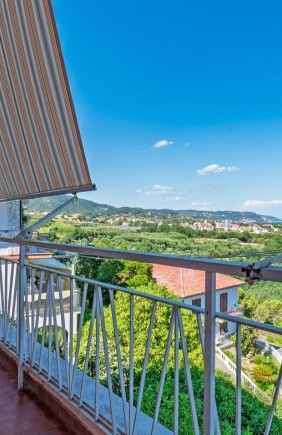
Savills’ third Italy New Build Survey points to a clear priority among people choosing new-build homes in Italy: the neighbourhood comes before square metres, a property’s exact position and its finishes.
Across all age groups, buyers connect a desirable neighbourhood with safety, green spaces, connectivity, services and day-to-day quality of life. The remaining priorities differ by buyer profile, budget and stage of life.
Why neighbourhood is overtaking square metres in Italy’s new-build market
The neighbourhood ranks first for every generation included in the survey. For international readers considering buying property in Italy, the findings place the wider setting around a home alongside the property itself in the decision-making process.
Savills identifies four buyer profiles within the 2026 new-build market:
- Urban Maximiser: city-oriented and focused on centrality and accessibility; willing to accept a smaller home to protect the location.
- Lifecycle Optimiser: a mature buyer seeking practicality, easy management and long-term financial sustainability; more open to downsizing and flexible on location.
- Space & Quality Seeker: families and households focused on comfort, materials and functionality; willing to consider less central areas for more space and higher quality.
- Experience & Community Seeker: interested in shared services, a sense of community and serviced apartments; flexible on both size and location and prepared to pay more for a higher-quality living experience.
What buyers want from a new-build home in Italy in 2026
Energy efficiency is the top reason for choosing a new-build property, cited by 19% of respondents.
It is followed by avoiding renovation work (14%), construction and materials quality (13%), a home that has never been lived in (11%) and modern technology (11%).
Move-in-ready convenience is the main reason for 5%, while a lower purchase cost is cited by 4%.
- The survey reports that 60% of respondents have a budget of up to €450,000, and purchases are mainly financed through a mortgage.
- More than half of the sample is aged over 46, and 50% have permanent employment.
City living remains the overwhelming preference
Urban living is preferred by 80% of respondents. The sea comes second at 12%, ahead of the countryside (4%), mountains (2%) and lakes (1%).
- Buyers aged 46–65 show increased interest in leisure destinations, including the coast, mountains and countryside.
- In contrast, 86% of over-65s name a city as their preferred destination.
Parking, security and outdoor space are shaping demand
Private parking is the only feature that attracts support across every spending level, selected by 36% in the entry-level segment and 44% among buyers with budgets of €750,000 to €1 million.
- In the segment up to €450,000, 24-hour security ranks second and electric-car charging points third.
- Between €450,000 and €750,000, 24-hour security remains in second place, while shared rooftop spaces and charging points are tied in third.
- At €750,000 to €1 million, concierge services rise to second place, selected by 18%.
- Above €1 million, swimming pools, 24-hour security and concierge services share second place.
Outdoor areas are considered essential by 81% of 36–45-year-olds and 53% of over-65s.
What changes between younger, family-age and older buyers
Under-35s: transport, services and keeping the space
Following the neighbourhood, under-35s prioritise public transport, local services and green spaces. Energy efficiency and smart technology rank in the middle.
Reduced floor space is their hardest compromise: 59% would not accept a smaller home.
Buyers aged 36–45: more flexible on location and size
Transport, local services, green areas and building amenities follow neighbourhood in this group’s priorities.
They are the most flexible group: 40% would accept a less central position and 38% would sacrifice square metres to find the right project.
Buyers aged 46–65: private parking is the hardest concession
This group ranks transport and building amenities immediately after neighbourhood. 33% are looking to move to a larger home, while 31% are looking to downsize.
Giving up private parking is the least acceptable compromise for 25% of this group, the highest figure among all age categories.
Over-65s: amenities, family and downsizing
For over-65s, building amenities are second in importance, while proximity to family becomes more significant.
Downsizing is the most common route, chosen by 42%. 44% would accept fewer square metres and 81% fund their purchase almost entirely through their own resources.
Stay in the know about living in Italy as a foreigner—get our weekly newsletter for the latest travel, legal, and lifestyle news.
For a taste of the high life, sign up for the monthly luxury market round-up.