Italy’s greenest cities do not follow one neat ranking. Some lead for the sheer scale of their parks and public green areas, while others stand out for the number of trees relative to their population.
The latest data also points to a marked north–south divide, with the north-east recording substantially more green space per resident than the islands.
Trento and Rome lead for total urban green space
A 2025 report on urban green space in Italian provincial capitals found that half of the total green-space surface, excluding protected natural areas, is concentrated in 13 cities.

The regional figures underline how unevenly green space is distributed. Provincial capitals in north-east Italy average 64.0 m² of green space per inhabitant, compared with 27.9 m² in central Italy and 27.5 m² in southern Italy. The lowest average is reported in the islands, at 20.8 m² per inhabitant.
City | Urban green space |
|---|---|
Trento | 47.5 million m² |
Rome | 47.3 million m² |
Milan | 25.6 million m² |
Bolzano | 24.3 million m² |
Turin | 23.7 million m² |
Isernia | 21.1 million m² |
Parma | 17.3 million m² |
Terni | 16.7 million m² |
Rieti | 15.8 million m² |
Modena, Genoa, Naples and Trieste | Between 12 million and 14 million m² each |
Rome’s trees and plans for 2027
Rome’s size plays an important part in its green-space figures. The city’s administrative territory covers approximately 1,287 km² and includes urban districts, parts of the Agro Romano, agricultural land, parks and areas under archaeological and natural protection.
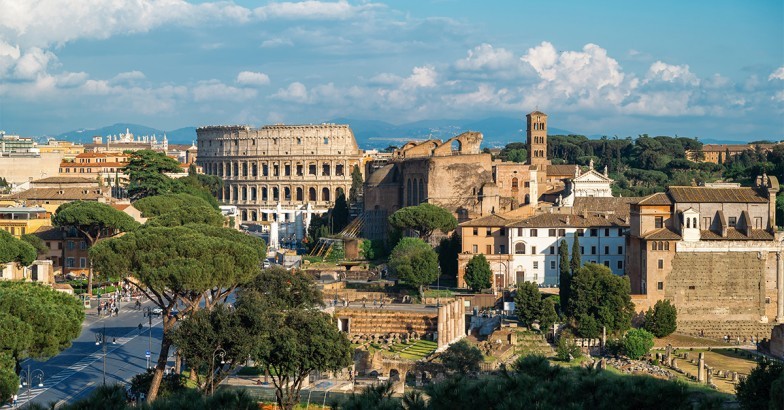
Rome has more than 462 million m² of urban green space. Its public tree stock stood at 390,054 specimens in the Bilancio Arboreo 2021-2025. Between November 2021 and December 2025, Rome planted 67,640 plants and recorded 29,842 reductions, creating a positive balance of 37,798 new trees.
A further 19,336 trees are scheduled for planting by December 2027, with an investment of €10 million. The plan also covers stronger monitoring and maintenance of green spaces, work to restore places without trees, and completion of street-tree rows already in place.
Modena has the highest number of trees per resident
For tree numbers relative to population, Modena comes top of the cities listed in the 2025 report, with 117 trees per 100 inhabitants.
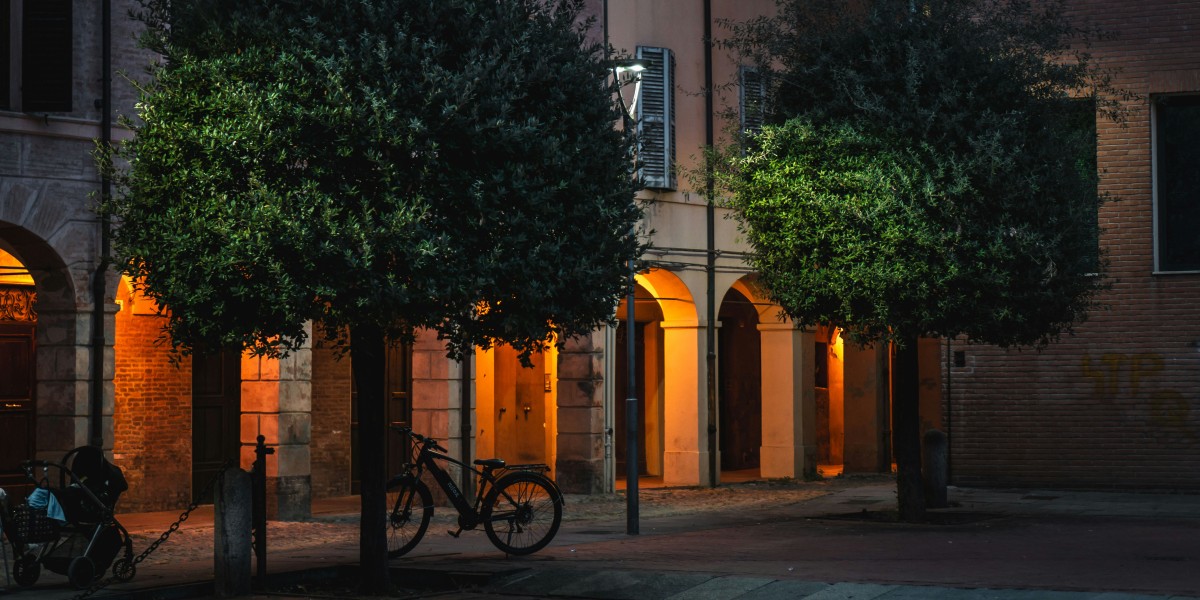
Across the provincial capitals included in the report, 3,153,349 trees were counted in 2023. That works out at an average of 18.0 trees per 100 inhabitants, a rise of 6.3% compared with 2022.
Cities with the most trees per 100 inhabitants
City | Trees per 100 inhabitants |
|---|---|
| Modena | 117 |
| Trieste | 114 |
| Cremona | 108 |
| Mantova | 94 |
| Brescia | 87 |
Reggio Emilia | 6 |
According to Ecosistema Urbano 2025 di Legambiente
Cities with lower tree ratios
At the other end of the ranking, Viterbo, Trapani, Catania and Siracusa each record fewer than four trees per 100 inhabitants on average.
The report also states that 10 provincial capitals, mainly in southern Italy and the islands, do not meet the legal minimum of 9 m² of urban green space per inhabitant. Messina is among the cities named.
What is the greenest city in Italy?
The figures point to a varied picture. Trento leads on total urban green space, Modena on trees per inhabitant, and Rome combines extensive green areas with a large public tree stock and a further planting programme scheduled through 2027.
Sources
- Quanti sono oggi gli alberi a Roma e in che modo cambieranno la città, idealista/news
- Bilancio Arboreo 2021-2025
- Comitato per lo Sviluppo del Verde Pubblico – Relazione Annuale - 2025 by Rete Ambiente
- Ecosistema Urbano 2025 di Legambiente
Stay in the know about living in Italy as a foreigner—get our weekly newsletter for the latest travel, legal, and lifestyle news.