In southern Tuscany, a small hilltop village is built around 42 thermal springs that have flowed for millennia. The waters still define daily life here, feeding both free-access stone baths and established spa resorts, and drawing a steady mix of visitors in search of slow, restorative stays.
San Casciano dei Bagni and its 42 thermal springs
Known in antiquity as “Fontes Clusinae,” the springs of San Casciano dei Bagni were first used by the Etruscans. They were later developed by the Romans, who constructed facilities to make use of their therapeutic properties. Medieval records refer to the area as ad balneo, and by the 17th and 18th centuries European nobles were travelling here for extended cures.
While larger spa towns rose to prominence in the 19th century, this village remained more understated, preserving both its thermal sources and visible traces of its long history.
Free thermal baths near the historic centre
One of the most compelling aspects, especially for budget-conscious travellers, is the presence of free-access thermal pools just a few hundred metres from the centre.
The two main sites are Bagno Grande and Bagno Bossolo. These ancient stone basins are still open to the public at no cost. The water flows continuously, creating a natural hydromassage effect with bubbles and small jets.
- Bagno Grande is characterised by milky water, with limestone sediment visible on the bottom.
- Bagno Bossolo is smaller and more enclosed. Local tradition associates its waters with relief for skin burns.
The springs maintain a constant temperature throughout the year, and bathing is possible even in winter, when steam rises clearly against the cold air.
Luxury spas and resort living
Alongside the free pools, high-end thermal resorts are using the same spring water for structured wellness programmes.
These establishments feature panoramic thermal pools, organised spa paths and dedicated treatments.
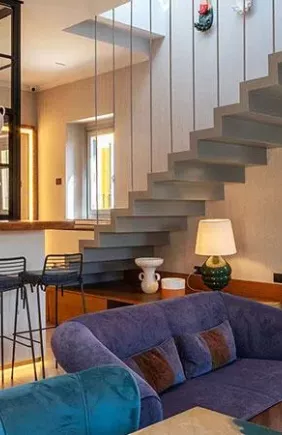
Accommodation in the village and surrounding countryside ranges from small local hotels and apartments to agriturismi and upscale thermal resorts.
A compact hilltop centre shaped by water and history
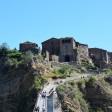
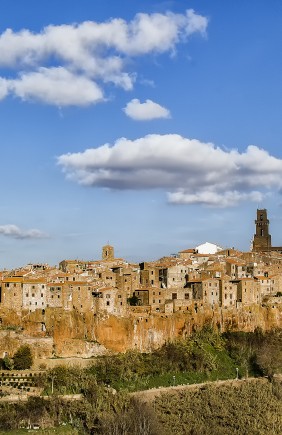
The historic centre sits in a circular layout on a hilltop, with stone houses tracing the line of former defensive walls. Piazza Matteotti looks out over cultivated fields and cypress-lined slopes, while a neo-Gothic castle from the early 20th century marks the approach and blends into the older village fabric.
Churches, civic buildings and Etruscan traces
Despite its size, the village holds several notable landmarks.
- The Collegiata di San Leonardo has medieval origins, a bell tower completed in 1606 and an altarpiece by Pietro di Francesco Orioli.
- The Palazzo Comunale, once home to the Podestà, displays stone coats of arms and an engraved column with old local units of measurement. It also preserves an Etruscan terracotta funerary urn.
- Just outside the walls, Santa Maria della Colonna stands on the site of a former temple to Hygieia and is associated with the care of poor sick visitors.
Traditions and food in this corner of Southern Tuscany
Palio di San Cassiano
Community life still revolves around local festivals. In August, on the Sunday before 13 August, the village holds the local festival Palio di San Cassiano.
Traditional games such as sack races, the greasy pole and pot-breaking determine the starting order for the final event: the corsa della ranocchia. In this race, captains push a wheelbarrow carrying a frog balanced on a small platform, aiming to reach the finish line without it falling.
The event is preceded by a historical parade in Renaissance costume, with flag-throwers and drummers.
Sagra del Ciaffagnone
In June, over two weekends, the village hosts its own Italian food festival, Sagra del Ciaffagnone.
The ciaffagnone is a thin crêpe. It is cooked in large pans, flipped in the air, and served either savoury, often with grated pecorino, or sweet with jam or chocolate spreads.
Local produce and typical dishes
The gastronomy of this part of southern Tuscany centres on straightforward ingredients. Tuscan extra virgin olive oil, Chianti wine, local truffles and pici, a thick hand-rolled pasta.
One of the most typical sauces is aglione, made with a large, mild local garlic cooked with olive oil, chilli and tomato preserve until thick and slightly spicy.
Stay inspired for your travels in Italy —get our weekly newsletter for the latest travel, legal, and lifestyle news.