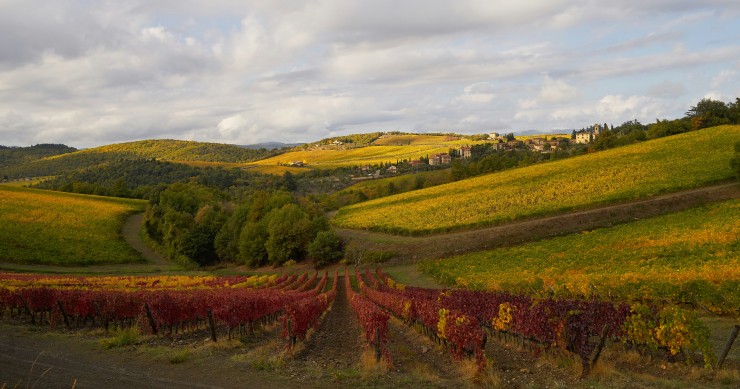
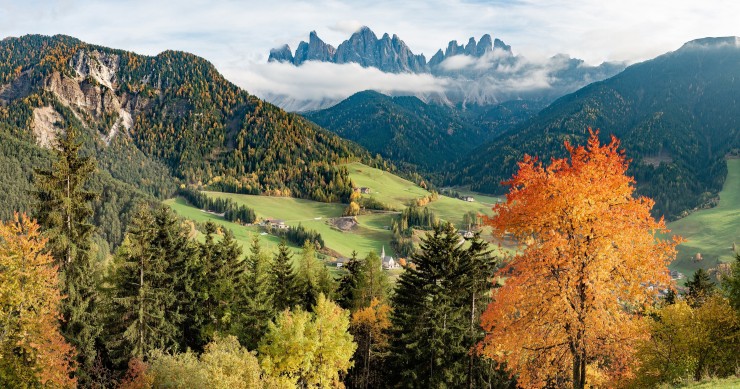
Tuscan autumn occupies that golden zone where everything balances out: temperatures are mild, the days are still bright, accommodation prices are more affordable, and the village streets are finally accessible without crowds. It's also the perfect time to explore the Val d'Orcia, which turns ochre and brown; the Garfagnana reveals its chestnut groves, and the natural hot springs of Maremma invite you to soak in the crisp autumn air.
How many regions can fit into a single view? In Irpinia, the answer is a surprising five. In Frigento, a small hilltop town at 911 metres, a natural terrace makes it possible to see Campania, Puglia, Basilicata, Molise and Abruzzo at the same time. It is a particular distinction that makes this borgo an unusual case in Italy.
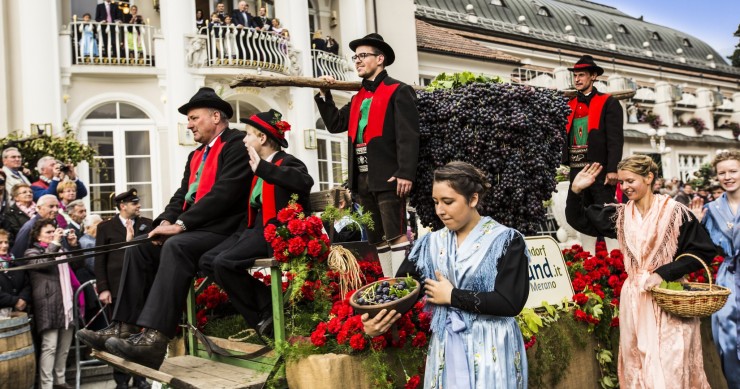
At the start of autumn, Italy prepares for the grape harvest. In this setting, grape and wine sagre — local food and wine festivals — are far more than simple village celebrations. They reflect centuries of winemaking tradition, celebrate the identity of each area and give visitors a taste of local food, music and popular culture.
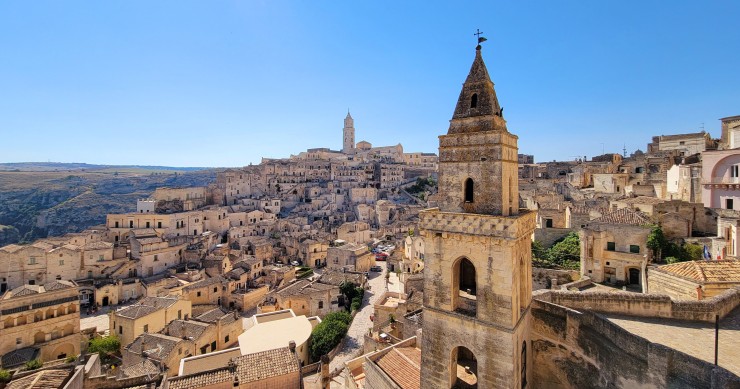
Italy is dotted with beautiful historic centers almost everywhere: medieval churches, noble palaces, artisan workshops, and squares and piazzas tell the story of the evolution of the urban fabric of cities and of society itself. Yet, beyond the emotion it evokes, the definition of a historic center is far from obvious: it's not simply the "old quarter" of a city, but a concept with very specific cultural, urban planning, and legal roots.
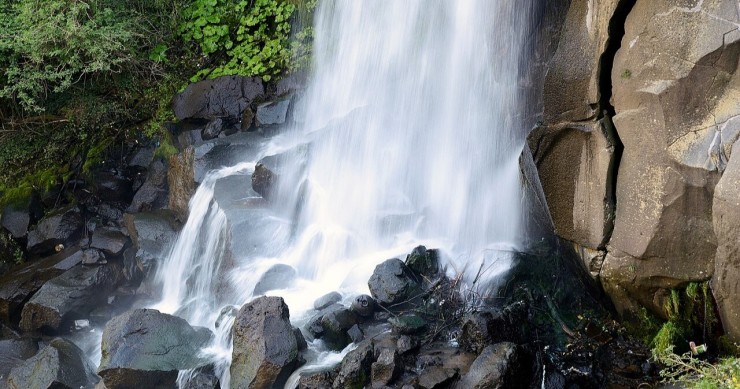
Less than an hour from Rome lies a town where water reigns supreme. It's Nepi, and the Etruscan etymology of its name means "water." The town sits on a tuff promontory surrounded by deep ravines, streams, and mineral springs that feed some of Lazio's most evocative waterfalls. So, what to know about the Nepi waterfalls, the Cascata del Picchio, the Cascata dei Cavaterra, and the Cascata del Pizzo, which offer tranquility and incredible views.
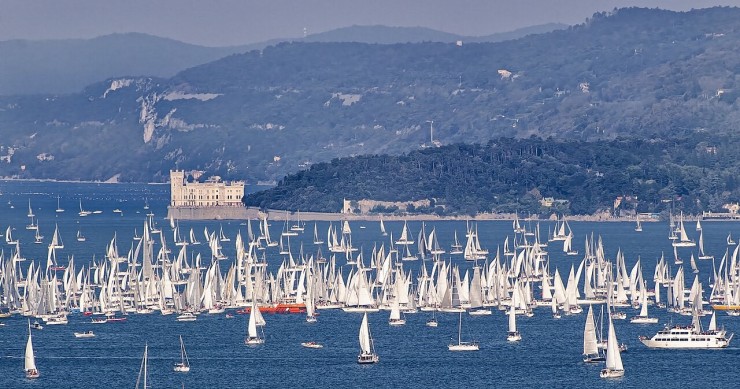
As the colors of autumn paint villages and hills, a packed calendar of cultural, food and wine, and sporting events transforms Italy into an open-air stage. From the great regatta in the Gulf of Trieste to the courtyards of Sardinia, from the red carpet of Roman cinema to the white truffle of the Langhe, here's what to do in Italy in October 2026 and where to plan a weekend getaway.
In Italy, "borgo" and "comune" are often used synonymously, yet they tell entirely different stories. The difference between "borgo" and "comune" isn't just a linguistic issue, but touches on historical, legal, and cultural aspects deeply rooted in the Italian fabric. In short, "borgo" is a concept tied to identity and landscape, while "comune" is an administrative entity recognized by law.
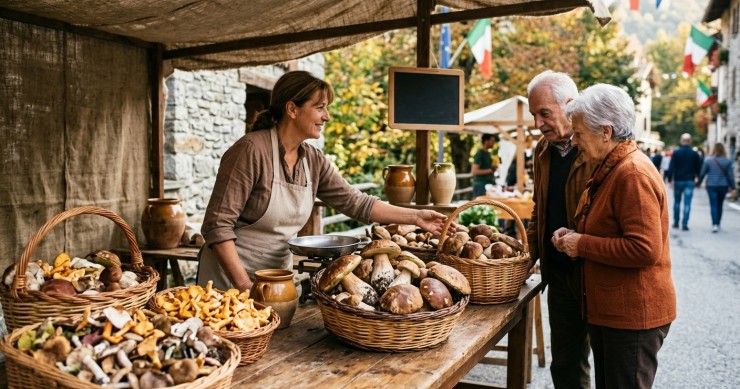
October in Italy is the most anticipated month for mushroom pickers, food enthusiasts, and nature lovers- the time when the entire peninsula comes alive with festivals, village fairs, and food events dedicated to mushrooms. From the Dolomites to the Apennine hills, from the Umbrian woods to the
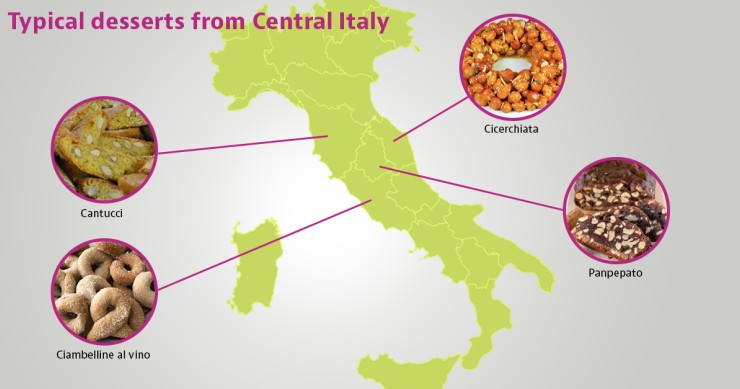
Central Italy is one of the country’s strongest areas for traditional sweets. Among hills scented with wine, medieval borghi clinging to rock and monasteries where recipes have been passed down for centuries, every region has at least one dessert that tells its story better than any tourist brochure. Between the wine biscuits of the Castelli Romani, crunchy Tuscan cantucci and Marche carnival sweets, central Italy’s traditional baking is a world worth exploring one bite at a time.
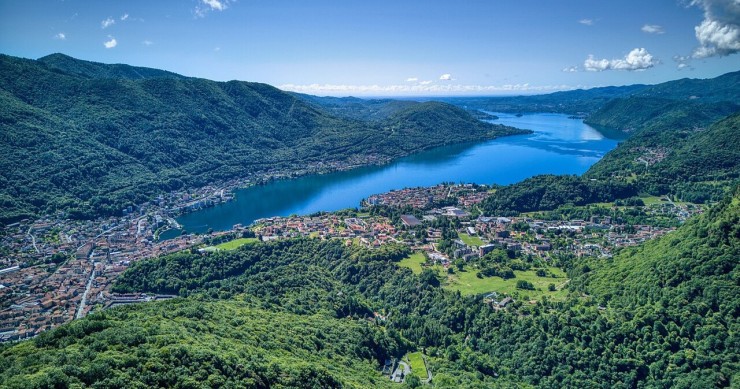
It looks like a volcanic lake, but it was shaped by ice. Lake Orta, west of Lake Maggiore, between the provinces of Novara and Verbano-Cusio-Ossola, packs an elegant waterside village, a tiny monastic island and a UNESCO-listed Sacro Monte into just a few kilometres. Two days are enough to combine scenery, art and a bit of peace and quiet without rushing, travelling on foot and by boat.
Italy has three cities in the world’s top 30 for quality of life in the 2026 Global Cities Index.
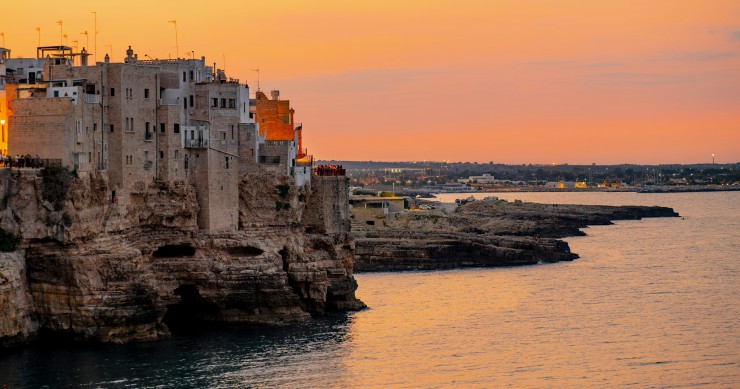
Puglia is a serious alternative to Tuscany, the Amalfi Coast and northern Italy’s pricier cities.
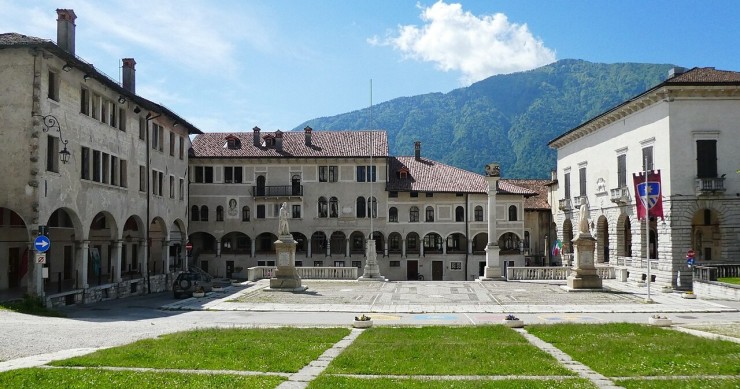
Perched on a hill in the province of Belluno, the walled town of Feltre has one of Italy’s best-preserved Renaissance historic centres. It is surrounded by the Belluno Dolomites and open countryside. The town also hosts events such as its well-established Palio, or historical pageant, and has a food tradition that can hold its own with the best of them.
As soon as the temperatures drop and the woods turn red, orange, and gold, the perfect atmosphere is created for discovering the most beautiful nature trails. But what are the 6 best hikes to do in Italy this fall? From the Dolomites to the Calabrian Sila, you can explore Alpine ridges, lakeside trails, or mule tracks in the southern Apennines during the autumn months.
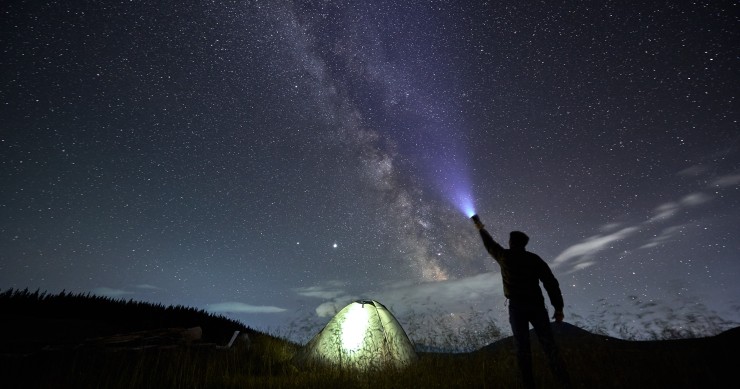
Autumn is the best season for stargazing in Italy. The nights are getting longer, the air becomes drier and clearer, and light pollution is less of a problem in more remote areas. From the Alps to the islands, Italy is home to observatories, astronomical parks, and plateaus where the Milky Way is once again visible to the naked eye. Here, then, are some of the best places to see the stars in autumn in Italy.
Copper-coloured leaves, trails free of summer crowds and crisp air that makes walking a pleasure: autumn is when Italy’s long-distance walking routes are at their best.
Each October, Barcolana transforms Trieste’s waterfront into one of Italy’s great sporting spectacles.
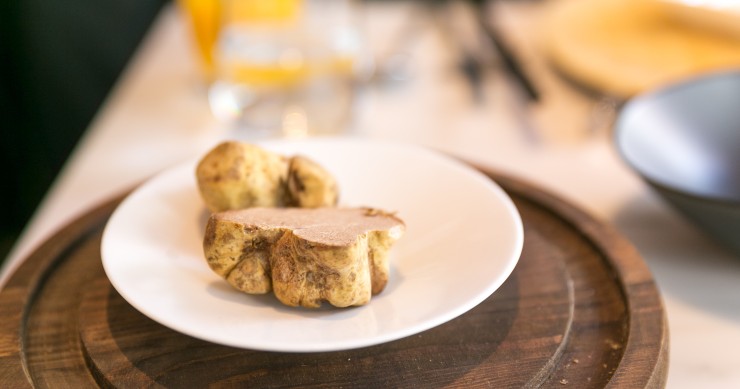
The International Alba White Truffle Fair returns to Alba, Piedmont, from 10 October to 6 December 2026.
The Tremiti Islands sit in the Adriatic Sea, around 22 kilometres off the Gargano coast in Puglia.
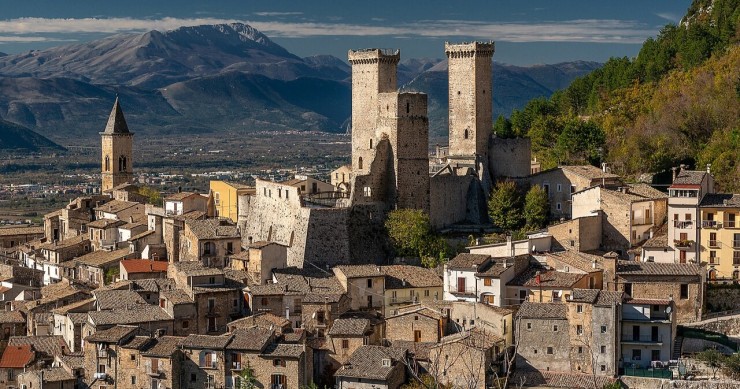
Italy is home to small places with a special feel, where history, architecture and scenery come together in almost fairytale-like settings.
Rome has no shortage of headline acts. The Colosseum, the Trevi Fountain and the Vatican draw the crowds, while areas such as Trastevere and Monti tend to dominate the neighbourhood chat.
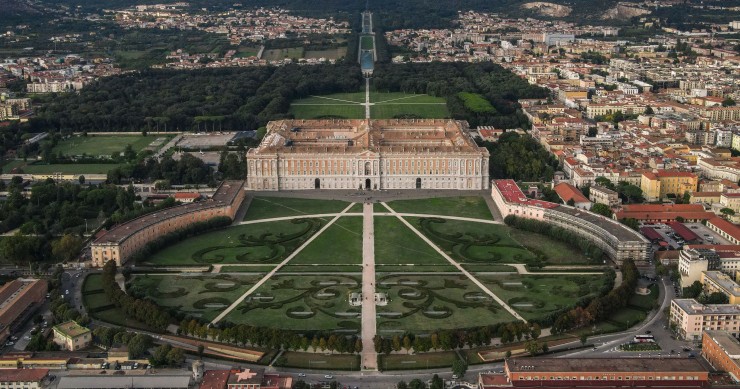
Some places are able to become film sets with hardly any alteration at all: spaces with such obvious grandeur that artificial scenery feels unnecessary. The Royal Palace of Caserta is one of them. A UNESCO World Heritage Site since 1997 and a towering achievement of Italian Baroque architecture designed by Luigi Vanvitelli, this extraordinary royal residence has appealed to directors across the world, including George Lucas, Ron Howard and J.J. Abrams.
There is a point on the approach to Civita di Bagnoregio when the modern world rather abruptly falls away. A long pedestrian bridge crosses a deep valley towards a cluster of honey-coloured stone houses, seemingly detached from the rest of Lazio. At a distance it looks almost too neat to be real.
A 65% ecobonus for certain energy-saving interventions in primary residences. This is a significant development that could come into effect in the coming months. The government is apparently considering a possible strengthening of the incentive as part of the approximately €14 billion budget flexibility related to the energy transition. The economic daily Il Sole 24 Ore reported on the matter, suggesting that a premium could be applied compared to the current level of tax rebates for windows, heat pumps and air conditioners, solar thermal hybrid systems, shading systems, and insulation.
In the day-to-day management of a shared residential building, communication and organisational needs often arise that fall outside the duties of the main bodies established by law, such as the administrator and the owners’ assembly. Other roles may therefore exist, including the condominium coordinator, who provides support with condominium management. This person has no independent decision-making powers and is not specifically regulated by the Italian Civil Code. Their role is to make relations between condominium owners, or a group of them, and the administration more straightforward.
Receive our latest news in your email Subscribe